Last updated November 18, 2026








Free written scope consultation - allowances, timeline, and change-order rules on paper before a single trade is scheduled
Home Renovation Warning Signs Every Homeowner Should Know
Ask a contractor which inspection they pulled last, and watch what happens. If they can name the project, the jurisdiction, and roughly when it was signed off, you’re talking to someone who runs jobs by the book. If they stall, change the subject, or admit the last job in Washoe County was “handled by a buddy,” you’ve learned everything you need before signing anything. The patterns that sink a remodel almost always show up during the quote, not six weeks into demolition. This guide walks through the contractual and behavioral signals that predict a bad outcome, laid out as a checklist you can run during the estimate itself. We’ve sat across from enough Winchester homeowners mid-disaster to know which questions surface the truth fastest.
Quick Answer
The clearest renovation warning signs are a contractor who won’t put a price in writing before work starts, a payment schedule front-loaded past 50%, an inactive or unverifiable Nevada Contractors Board license, slow responses before the contract is signed, and a job site left chaotic at the end of the day. Any one of these is a reason to slow down. Two or more together is a reason to walk.
Styles & brands we work with
- Kitchen remodeling
- Bathroom remodeling
- Home additions & ADU
- Roofing
- Windows & doors
- Driveway & pavers
- Fence
Table of Contents
- The Verbal Quote Trap
- How to Check a Nevada Contractors Board License in Two Minutes
- Payment Schedule Red Flags: What a Legitimate Draw Schedule Looks Like
- Communication Patterns That Predict Ghosting
- What a Job Site Should Look Like at the End of the Day
- The Five Questions That Reveal a Contractor in One Conversation
- Common Mistakes to Avoid
- When to Call a Professional
The Verbal Quote Trap
A verbal number is not a price. It’s an opening position. Any contractor who resists putting a figure in writing before the work starts is structurally set up to surprise you at invoice time, and it’s rarely because they’re dishonest. It’s because a verbal quote leaves every variable open: material substitutions, “unforeseen” framing rot, change orders nobody approved out loud. When the number finally lands on paper, it’s whatever the job actually cost plus margin, and you have no document to argue with.
We’ve watched this play out in Winchester’s older neighborhoods, particularly around the 1950s and 60s ranch homes where a bathroom wall hides a 60-year-old plumbing stack and a previous owner’s creative tiling. A written price accounts for that possibility up front, either as a stated contingency or a fixed scope with defined allowances. A verbal price pretends the risk doesn’t exist and hands you the bill later.
Here’s what a written quote should contain before you sign anything:
- A line-item scope: what’s being removed, what’s being installed, and the material brand by name (Kohler, Moen, and Delta fixtures should be specified, not referenced as “premium hardware”)
- A stated allowance for materials you’re choosing later, with the dollar figure per item
- A change-order process in writing: who approves, how it’s priced, how it gets documented
- A payment schedule tied to milestones, not calendar dates
- What happens if a hidden condition is found – the specific process, not “we’ll discuss it”
Ask for the written quote to be delivered before the contractor leaves your driveway. If that’s a problem, you’ve found the first warning sign.
How to Check a Nevada Contractors Board License in Two Minutes
Nevada makes this easy, and that’s exactly why an evasive answer is telling. The Nevada State Contractors Board maintains a public license lookup that shows any contractor’s status, classification, and disciplinary history. Pull it up on your phone while the contractor is still in the room.
- Go to the Nevada State Contractors Board license search and enter the license number from the contractor’s quote or business card.
- Confirm the status reads active. An inactive license means the contractor isn’t currently authorized to pull permits or perform work in the state, even if the license number itself is real and shows up in the search.
- Check the classification. Residential remodeling requires the right classification for the scope you’re hiring for; a license that doesn’t cover your work is a problem regardless of status.
- Read the disciplinary history section. Complaints and citations are public. A clean record with years of history is what you’re looking for.
- Confirm the business name on the license matches the name on the quote and the name that will appear on the contract. Mismatches are a structural problem, not a typo.
The excuse “the license is under a different name for tax reasons” is not a tax reason. It’s a way to keep you from finding something. In Winchester we’ve seen homeowners hire based on a magnetic truck sign and a friendly handshake, then discover six weeks into a kitchen gut that the license belonged to a dissolved entity. Check before the deposit, not after.
Payment Schedule Red Flags: What a Legitimate Draw Schedule Looks Like
The single most predictive contractual warning sign is a contractor who asks for more than 50% up front. Money paid before work means your leverage is gone. A legitimate draw schedule spreads payments across completed milestones so each payment releases after the previous stage has been verified.
A reasonable schedule for a mid-size bathroom or kitchen remodel generally looks like this:
- Deposit at contract signing: a modest percentage that covers material ordering and scheduling
- Draw at rough-in completion: after plumbing and electrical are in and inspected
- Draw at drywall and finish prep: after the space is closed up and ready for surfaces
- Draw at substantial completion: after tile, fixtures, and cabinetry are installed
- Final payment: held until the punch list is closed and you’ve walked the job
What to watch for on the wrong side of that ledger: cash-only demands, a request for the entire material cost up front “to lock in pricing,” payment tied to calendar dates rather than milestones, and any pressure to pay before you’ve seen progress. We’ve seen Winchester clients hand over 70% before demo and wait three months for a contractor to show up twice. A draw schedule protects you. If the contractor won’t work from one, the schedule is the least of your problems.
Communication Patterns That Predict Ghosting
Response time before the contract is signed is a direct predictor of response time during a mid-project problem. This is the single most underrated warning sign in the whole process, because it feels rude to judge someone on how fast they text back. Judge anyway.
During the quote phase, a contractor is trying to win your business. That’s the best behavior you will ever see from them. If they take four days to answer a question when they’re hoping to close, imagine how they’ll handle a Thursday afternoon call about a leaking rough-in when they already have your money.
Specific patterns to watch for:
- Slow replies before signing: more than 48 hours for a direct question is a signal, especially in a market where most communication happens by text
- No single point of contact: if you can’t name who is responsible for answering you during the build, nobody is
- Vague answers on scheduling: “soon” and “next week sometime” are not dates; a contractor running jobs by the book can tell you when they’ll be on site
- Hostility toward questions: a contractor who treats a reasonable question as an insult will treat a legitimate problem the same way
In Winchester’s newer builds out toward the foothills, we regularly see projects stall because the homeowner can’t get a straight answer on where the crew is. A contractor who confirms who’s arriving, when they’ll be there, and what’s happening that day – in writing, before the doorbell rings – removes that problem entirely.
What a Job Site Should Look Like at the End of the Day
A chaotic job site is a scheduling and quality signal, not just an aesthetic one. Walk past a renovation in progress and look at how it’s left at 5 p.m. Materials staged and stacked by trade, debris bagged and hauled, tools secured, dust barriers intact: that’s a crew running a sequence. Debris piled in the driveway, exposed wiring, tile boxes open in the rain, and a dumpster that’s been full for a week: that’s a crew without a plan, and a plan is what protects your schedule and your finish quality.
Why it matters more than it seems: material staging reflects sequencing. If drywall is delivered before rough-in is inspected, someone is cutting corners. If countertop slabs are leaning against a wall in the garage for three weeks, they’re at risk of damage and you’re on the hook for the replacement. In the high-desert climate around Winchester, materials left exposed to afternoon sun and dry wind warp and crack faster than they would in milder regions. A crew that stages properly knows that.
When you interview contractors, ask to walk a current job site. Not a finished project, an active one. What you see at the end of the workday tells you more about how your job will run than any brochure.
The Five Questions That Reveal a Contractor in One Conversation
You don’t need to interrogate anyone. Five questions, asked casually during the quote, separate the contractors who run jobs from the ones who run on improvisation.
- “What’s your license number?” Not whether they’re licensed. The number, so you can look it up while they’re standing there. A confident contractor hands it over without hesitation.
- “What was the last inspection you pulled, and who signed off on it?” Anyone actively doing permitted work in Winchester and the surrounding county can answer this from memory. A stall here is the answer.
- “Can I see the written payment schedule for my job?” Not a sample. Yours, with milestones and dollar amounts. This is the moment the verbal-quote contractor starts sweating.
- “Who’s my point of contact once work starts, and how do I reach them?” A specific name and a specific number. If they route you to a general voicemail, that’s what you’ll get mid-project too.
- “What happens if something fails after closeout?” The right answer is a written guarantee with a specific duration. A 365-day done-right promise is one version; “we’ll work with you” is not.
Every one of these is answerable in thirty seconds by a contractor who already runs projects this way. The questions work because the answers are checkable, not because they’re clever. For a broader look at how the estimate and build process should run end to end, see General Contractor in Winchester.
Common Mistakes to Avoid
- Hiring on the lowest verbal bid. The lowest number is often the one that gets revised upward at invoice, and a verbal bid gives you nothing to argue with. Get everything in writing before you compare numbers.
- Paying more than 50% up front. Especially in cash. Nevada law protects you on a milestone draw schedule; a contractor who won’t work from one is asking you to skip that protection.
- Skipping the Nevada Contractors Board lookup because the contractor “seems solid.” Charm and competence are different things, and the lookup takes two minutes. Winchester homeowners who skip it are the ones who call us after demo has already started.
- Overlooking the permit question because it’s a “small” job. Electrical, plumbing, and structural work in older Winchester homes nearly always needs a permit and an inspection, even for a bathroom refresh. Unpermitted work can affect your insurance and your ability to sell.
- Choosing a contractor based on response time before the contract but ignoring everything else. Fast replies are good, but they should come with a license, a written price, and a draw schedule. Speed alone isn’t a substitute for substance.
- Letting material brands go unspecified. “Premium fixtures” can mean anything. If the quote doesn’t name the brand and model of the tile, fixtures, and cabinetry, you have no leverage on substitutions.
- Assuming the end-of-day mess is temporary. A site that stays chaotic past the first week is a sequencing problem, not a housekeeping one, and sequencing problems show up in your schedule and your finish quality.
See the difference
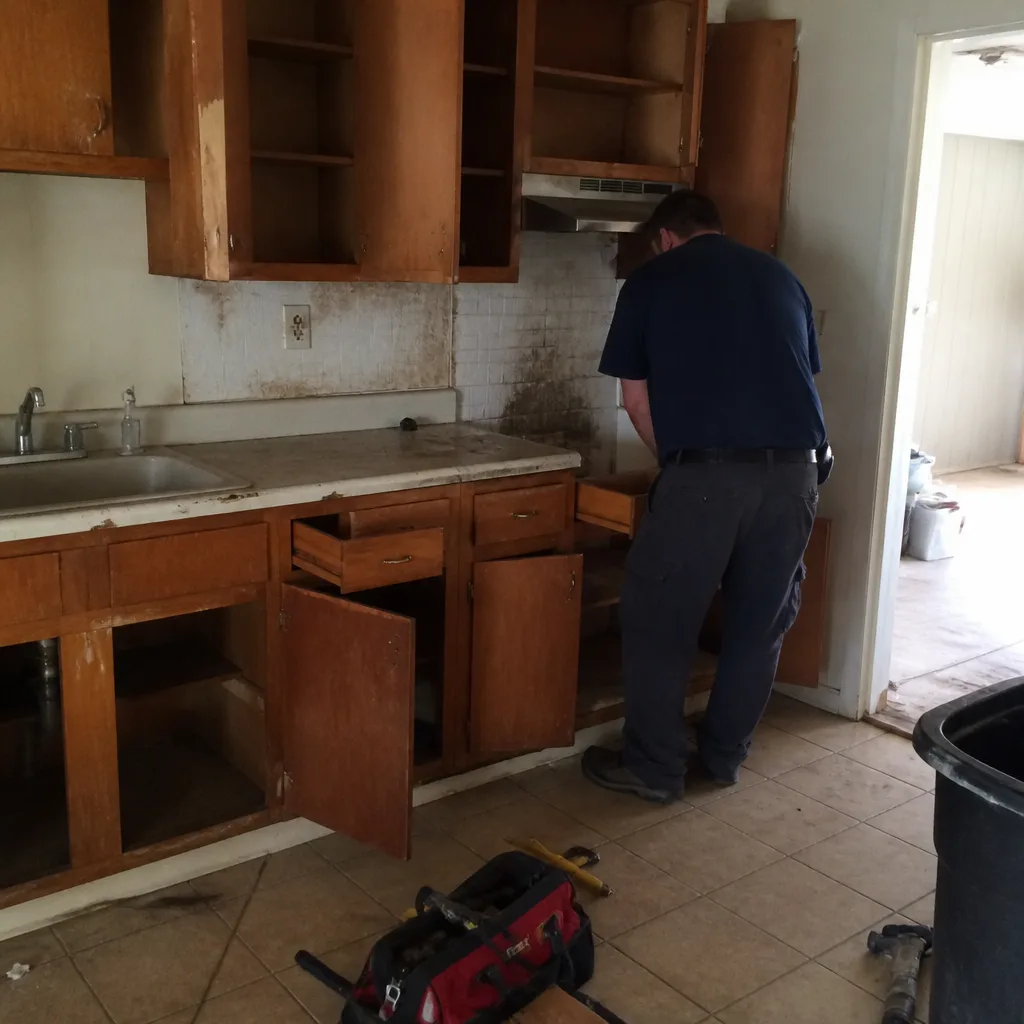 Before
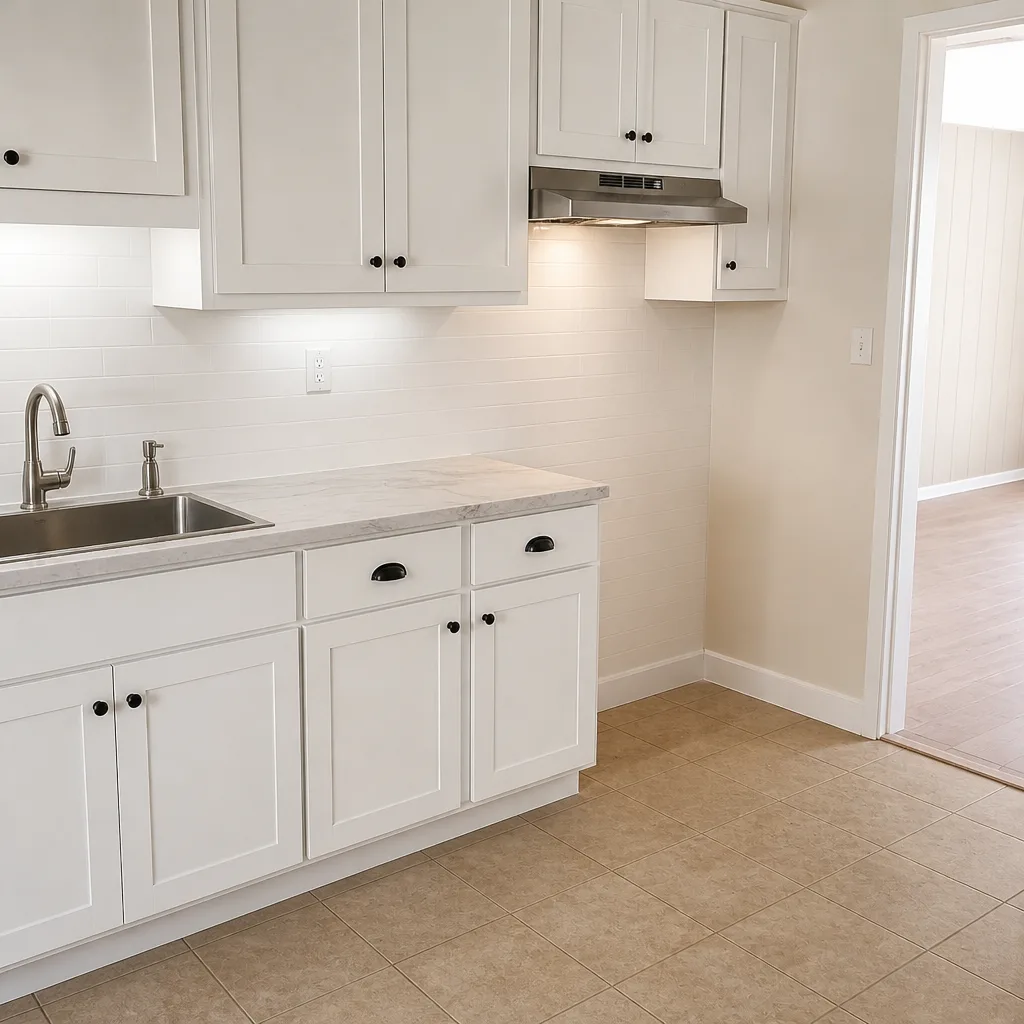 After
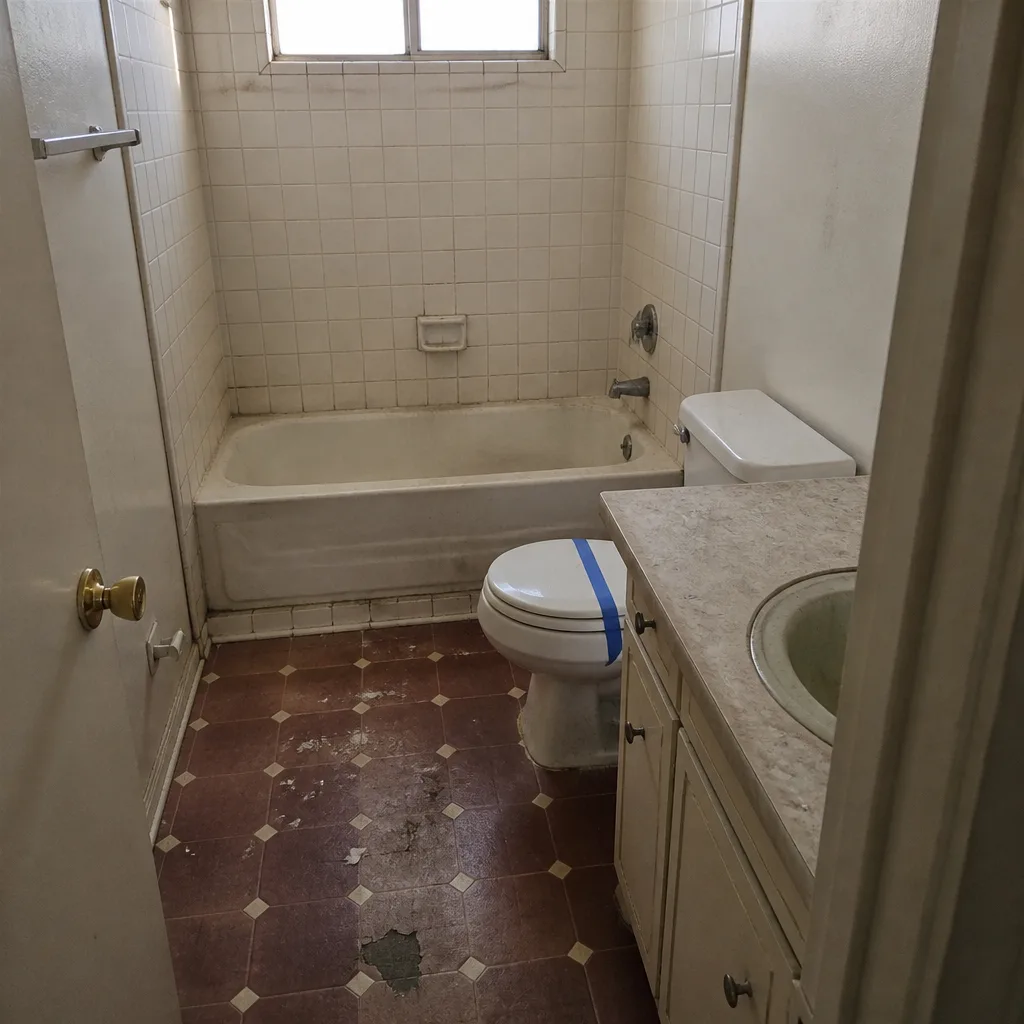 Before
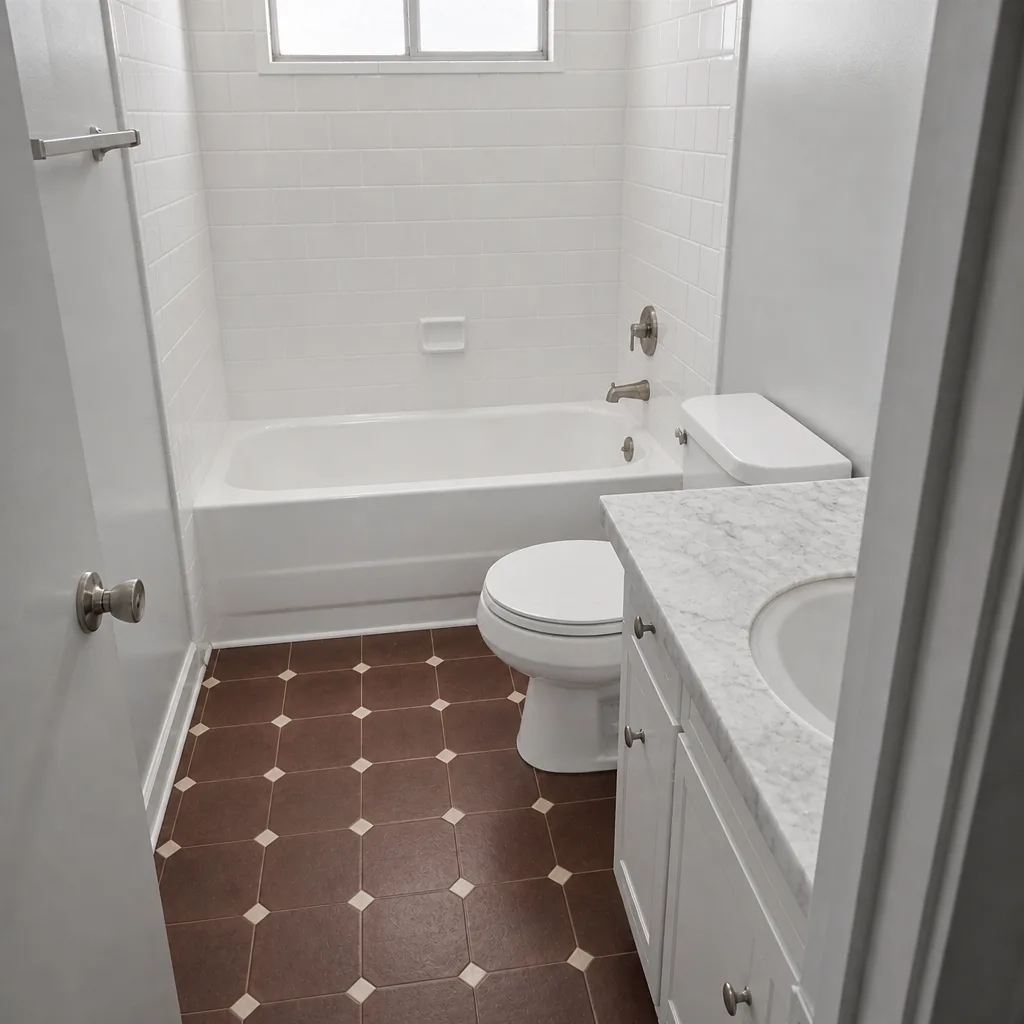 After
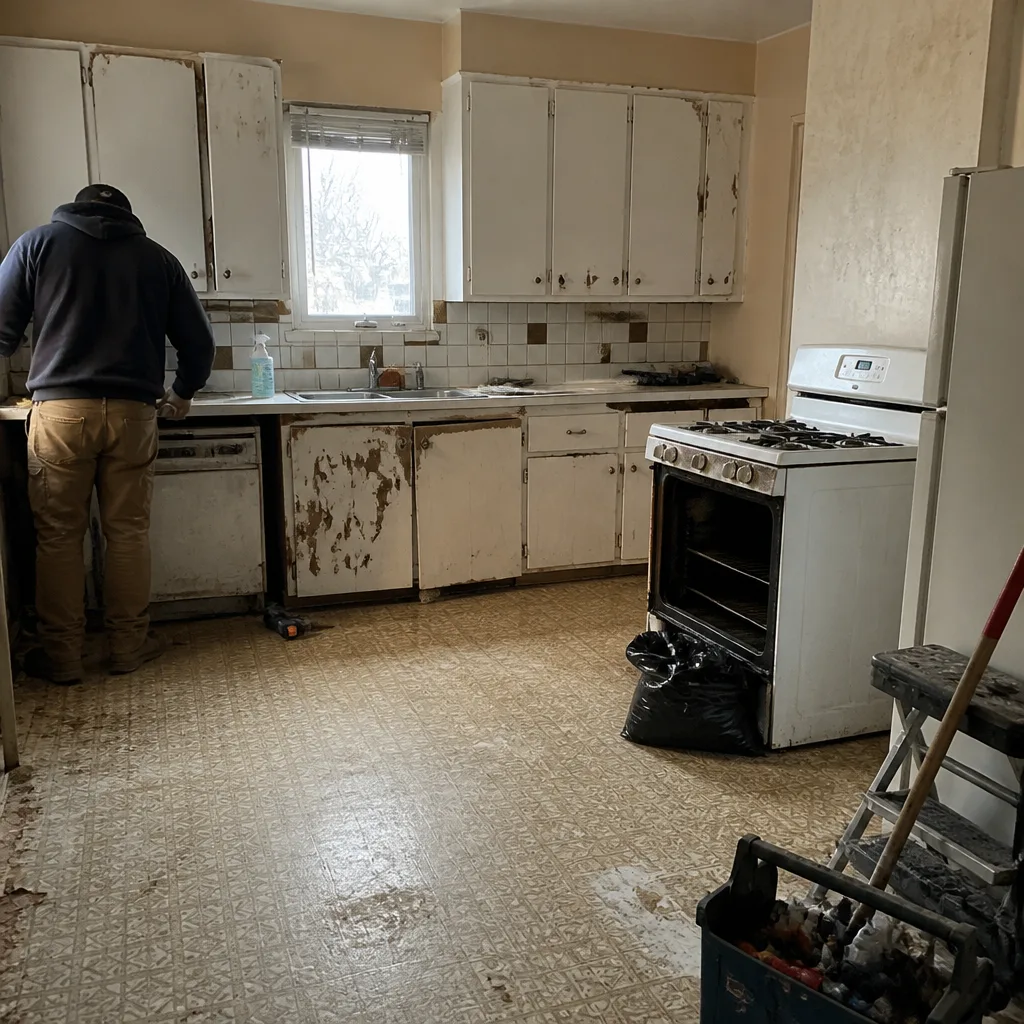 Before
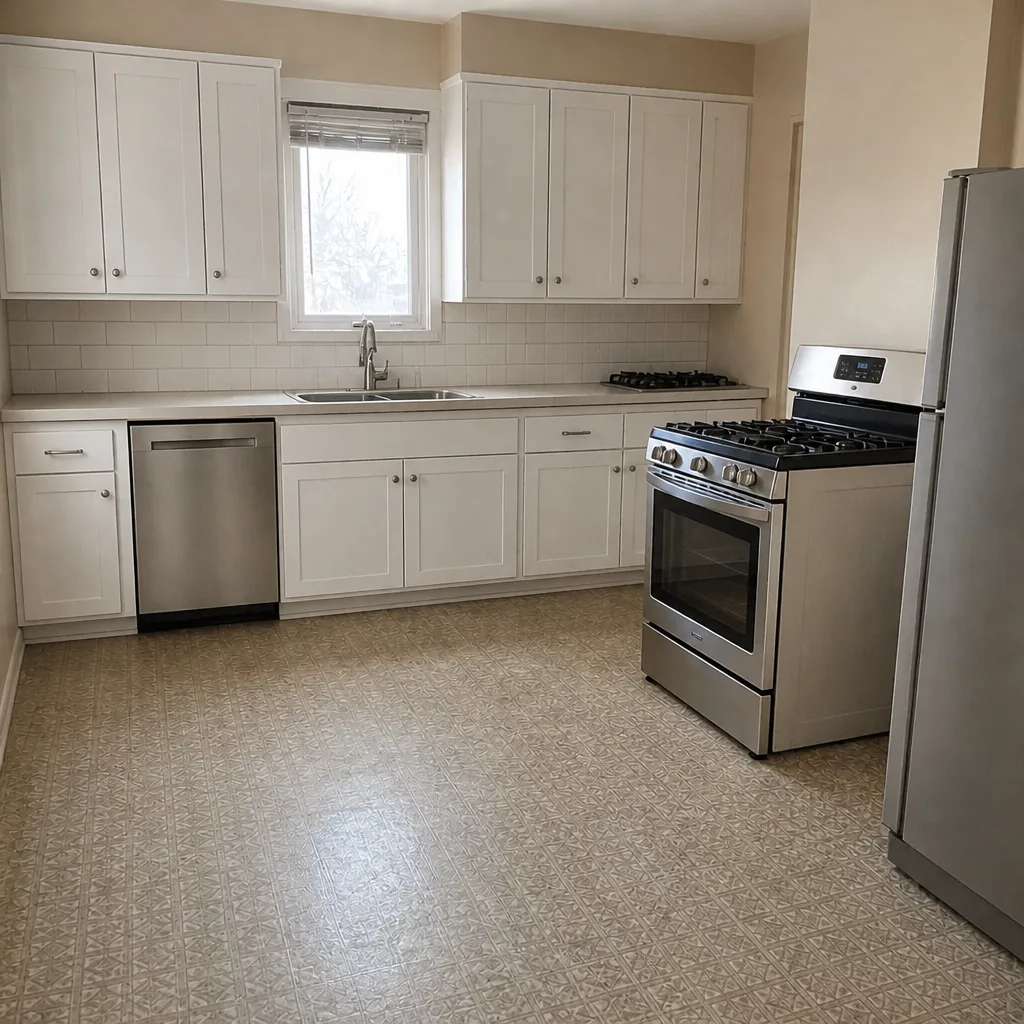 After
When to Call a Professional
Some problems are fixable on your own. Some need a licensed professional before anything else moves. Call us if you’re already mid-project with a contractor who’s stopped showing up, if you’ve discovered unpermitted work in a home you just bought, or if a job you’re planning touches electrical, plumbing, or structural elements. Those are exactly the systems that fail when a handyman takes them on. We’ve also helped plenty of Winchester homeowners straighten out a half-finished bathroom before it becomes a full rebuild, and the sooner that starts, the less it costs. If you’re at the quote stage and want a written price and a walk-through to compare, that’s a free estimate. Call us at (888) 343-7097 for a free estimate and we’ll put the number on paper. See Bathroom Remodeling in Winchester for how we usually structure those conversations.
Frequently Asked Questions
Refusing to put a price in writing before work starts is the single most reliable warning sign, because it creates the structural conditions for a surprise invoice no matter how well the job goes. A contractor who quotes verbally has left every variable open: materials, scope, and hidden conditions. Ask for a written line-item quote before signing; if it can’t be provided, walk.
Use the Nevada State Contractors Board’s public license lookup, enter the license number, and confirm the status reads “active” and the classification covers your scope of work. You’ll also see disciplinary history. An “inactive” status means the contractor can’t pull permits for your job regardless of how long they’ve been licensed. This takes under two minutes and is worth doing while the contractor is still in the room.
A typical deposit stays modest (often 10-30%), with the rest spread across completed milestones and a final payment held until the punch list closes. Any request over 50% up front, or payment tied to calendar dates rather than verified progress, is a red flag. Call (888) 343-7097 for an exact quote on your scope – estimates are free.
A legitimate payment schedule ties each payment to a completed milestone: deposit at signing, payment at rough-in completion, payment after drywall and finish prep, payment at substantial completion, final payment after the punch list is closed. You should be able to see the schedule before signing, and each milestone should be something you can verify by walking the job.
In most cases yes, especially when the scope touches plumbing, electrical, or structural elements. Older housing stock in Winchester often involves updates to systems that require inspection before they’re closed up. Unpermitted work can affect your insurance and complicate a future sale. Your contractor should be able to name the last inspection they pulled without hesitating.
Document everything first: the written quote, the payment schedule, receipts, photos of progress and the current state of the site. Then get a second contractor out to assess what needs to finish. We’ve stepped in on plenty of stalled Winchester jobs, and starting that assessment early usually saves money over waiting. Call (888) 343-7097 for a free estimate on the remaining scope.
The Bottom Line
Renovation warning signs almost all live during the quote, not during construction. A written price, an active Nevada license you can verify yourself, a milestone-based payment schedule, fast answers before you sign, and a clean job site at the end of the day – those five signals predict the outcome of a remodel better than any personality test. If two or more are missing, slow down. If a contractor resists any of them, that’s your answer. We’ve built the way we work around those five signals because we’ve seen what happens when they’re absent. Ready to see what a written price and a real schedule look like for your project? Call (888) 343-7097 for a free estimate. And if you’re still mapping out the rest of the house, start with Kitchen Remodeling in Winchester or check our Sawyer Remodeling Winchester home page for the full scope of what we take on.
Written by the team at Sawyer Remodeling Winchester.