Last updated November 18, 2026








Free written scope consultation - allowances, timeline, and change-order rules on paper before a single trade is scheduled
Construction Warning Signs: A Winchester Homeowner’s Reference Guide
The diagonal crack above your door frame isn’t settling. It’s your foundation telling you something, and a contractor can read it in about 30 seconds. That’s the uncomfortable part about warning signs on a house: the ones that cost the most to fix rarely announce themselves with drama. They show up as a hairline at a corner, a stain you’ve walked past for a year, a shingle edge a little more curled than the last time you looked. This guide teaches you to read your own Winchester home the way we read one on a first walkthrough. You’ll learn which cracks matter and which are noise, what hides behind stucco, how to spot a roof that’s 12 to 18 months from a real repair, and how to document what you find so you know if it’s growing.
Quick Answer
The warning signs that matter most in a Winchester home are diagonal or stair-step cracks wider than a nickel, water stains that reappear after rain, shingles that have lost their granules or started to lift along an edge, and floors or doors that have begun to stick within a short span of time. Any single one of these is worth a professional look. Two or more together in the same area usually means one underlying cause, not several small problems.
Styles & brands we work with
- Kitchen remodeling
- Bathroom remodeling
- Home additions & ADU
- Roofing
- Windows & doors
- Driveway & pavers
- Fence
Table of Contents
- Reading Cracks: Cosmetic vs. Structural
- Water Damage Hiding Behind Stucco
- Roof Signs You Can See From the Ground
- HVAC and Ductwork Red Flags That Look Like Construction Problems
- How Winchester Soil and Heat Affect Foundations
- The Documentation Habit That Tells You If It’s Growing
- Deciding What’s a Repair and What’s a Remodel
Reading Cracks: Cosmetic vs. Structural
Most cracks are cosmetic. A little of that is normal as a house ages. The trouble is that the small percentage that aren’t cosmetic can tell you about a foundation or framing problem months before it becomes visible any other way. Three things separate the two: location, angle, and width. Read those in that order before you panic.
Location. A crack running through drywall in the middle of a wall is usually paint or a bad tape job. A crack that starts at a corner of a door frame or window opening and runs diagonally up and out is doing something more interesting, because it’s following a load path. In a finished Winchester home, the diagonal from a corner is the one we stop and look at.
Angle. Vertical cracks tend to be settlement and are often stable. Horizontal cracks in a foundation wall are the ones that deserve a structural engineer, not just a contractor. Stair-step cracks that track along the mortar joints of block or brick are a sign of movement, not shrinkage.
Width. A crack you can slide a credit card into (about 1/16 inch) is a diagnostic. A crack a quarter inch or wider is a call-now situation, especially if one side of the crack sits higher than the other.
- Hairline crack, vertical, stable for months: usually cosmetic
- Diagonal from a door or window corner: worth a look
- Stair-step through block or brick: worth a look
- Horizontal in a foundation wall: call a structural engineer
- Any crack where one side is proud of the other: call now
Water Damage Hiding Behind Stucco
Winchester’s housing stock leans heavily on stucco, and stucco is a hard worker that hides its injuries well. The exterior looks intact while moisture sits behind it, working on the sheathing and framing. This is one of the most common hidden problems we see on walkthroughs across Winchester, and it usually announces itself through an interior clue rather than an exterior one.
Where to look, in order:
- At the base of exterior walls. Any stain, soft spot, or bubbling paint where the stucco meets the sill plate. Stucco needs to terminate above grade with a weep screed; if it ran straight into the soil, water wicks up.
- Around windows and doors. Failed sealant at a frame, or a window with no proper head flashing above it, lets water in behind the stucco. We see this often on homes where replacements were done years ago without addressing the flashing above the new window.
- Under the eaves. A dark stain on the soffit, or paint peeling oddly at the fascia, points to a roof edge problem feeding moisture into the wall.
- Interior drywall low on a wall. A chalky line, a soft spot, or paint that blisters after rain is water finding its way out.
Probing is where a homeowner should stop. Digging into stucco without knowing the assembly behind it makes the problem worse, and on a wall that may already be wet, you can trigger a bigger failure. A trained eye can check moisture readings from inside the assembly with a meter before anyone puts a blade to it. If your exterior stucco is part of a larger exterior or General Contractor in Winchester scope, that’s a conversation for a walkthrough, not a weekend project.
Roof Signs You Can See From the Ground
You don’t need to climb. Most of the information you need about a roof’s remaining life is visible from the yard, the driveway, or the sidewalk, and it’s worth the 10 minutes with your phone. When we walk a Winchester property, the roof check takes about 30 seconds and tells us whether we’re looking at a repair or a replacement in the next year.
What to look for, from the ground:
- Granule loss. Shingles that look bald in patches, or granules collecting in gutters and at downspout outlets, are near the end of life.
- Curling and lifting at edges. Shingle edges that lift or curl at the rake or eave signal heat cycling and age. In Winchester’s summer heat, this shows up faster than most homeowners expect.
- Missing or slipped shingles after wind. One missing shingle is a repair. A pattern across a whole slope is a replacement indicator.
- Dark streaks or moss. Streaking is often algae, but moss holds water at the shingle surface and accelerates failure.
- Sagging along the roof line. Any dip in the ridge or eave line is a structural question, not a roofing question, and deserves a walkthrough before a shingle is touched.
- Ceiling stains after rain. Water on the inside of the sheathing often shows up before it shows on the exterior. Any stain is worth a look.
If you see three or more of these, you’re probably 12 to 18 months from a major repair rather than a minor one, and it’s worth confirming while the weather is still on your side. Roofing work involves height and fall risk, and it’s the kind of scope we strongly recommend leaving to trained professionals rather than self-inspection above the first ladder rung.
HVAC and Ductwork Red Flags That Look Like Construction Problems
Some of the “construction problems” we’re called to look at in Winchester turn out to be HVAC problems in disguise. When a homeowner describes a room that’s inexplicably hot or cold, condensation on a wall, or a musty smell in one room only, we start with the system before we start with drywall.
The signals to watch for:
- A room that’s always off-temperature. Usually a duct sizing or balancing issue, sometimes a duct that came apart in the attic.
- Condensation on a wall or ceiling. In our climate, a cold supply duct running through a hot attic will sweat. The moisture finds a surface and stays.
- Musty smell in one room, fresher elsewhere. Often a disconnected or torn flex duct pulling humid attic air into the room instead of conditioned air.
- Excessive dust after a remodel. Ducts can fill during construction if they aren’t capped. If your dust levels never returned to normal after a project, the ducts are the suspect.
- Short cycling and rising bills. Not a construction problem, but a sign your equipment is working harder than it should.
Any ductwork that runs through unconditioned attic space in Winchester should be insulated and sealed. If you’re remodeling and the attic is open, that’s the moment to get it right, not after the drywall is back up. Bathroom and kitchen remodels often reveal these adjacent issues, and a Kitchen Remodeling in Winchester project is a natural time to inspect the duct runs behind the walls while they’re accessible.
How Winchester Soil and Heat Affect Foundations
Winchester foundations live through a specific cycle: long dry summers, then a wet season that moves water fast. Expansive clay soils in the valley shrink when dry and swell when wet. A foundation that’s fine in spring can show a fresh crack in late summer. It’s not necessarily a failure. It’s movement, and it’s movement you want to track.
Two things to watch during that cycle:
- Cracks that appear in dry months and close in wet months. That’s your soil talking. Track it. If the same crack moves noticeably in both directions, that’s a foundation conversation.
- Water management around the foundation. A downspout that discharges within a foot of the foundation, a slope that runs toward the house instead of away, or a planting bed that holds water are all easy fixes that prevent hard ones. In Winchester, we consistently see the worst foundation movement on homes where the soil stays saturated against one wall for months at a time.
Foundation and structural work is one of the categories where we slow down and bring in a structural engineer before we recommend anything. Small changes to grading, drainage, and roof drainage are often enough to stabilize a foundation that’s just being pushed around by its soil. When they aren’t, we want the report before we quote any repair scope.
The Documentation Habit That Tells You If It’s Growing
The single most useful thing you can do for your own home is start a folder and take ten minutes with your phone once a season. A crack you can compare against a two-year-old photo is a completely different problem from a crack you “think might be new.” It’s a small habit that turns guesswork into information, and it’s exactly what a contractor does on a first walkthrough.
Here’s the routine we recommend to every Winchester homeowner:
- One photo per sign, with a reference object. Put a coin, a tape measure, or your house key next to the crack so you can read its width in the photo. A crack with no scale reference is a crack you’ll never measure.
- Name the file with the date and location. Something like “2025-08-14_north-wall-corner.jpg” is worth more than “IMG_2041.”
- Use the same photo angle every time. Stand in the same spot at the same distance. Comparisons only work if the shots match.
- Repeat once per season. Four photos a year of the same wall tells you whether a crack is stable or moving.
- Keep the exterior in the set. A photo of the ground line at the base of the wall each spring catches the slow stuff – a settling grade, a foundation exposure issue, a shifted downspout.
- Note any event that matters. A heavy storm, a plumbing leak, a landscaping project against the house. Any of those is worth a line in the folder.
If a crack widens measurably between two of those photos, that’s your cue to call us in. A trained technician with up to 21 years of experience can read movement in context, and the comparison photos make that conversation faster and cheaper for you.
Deciding What’s a Repair and What’s a Remodel
The trickiest judgment call in the whole guide is knowing when a warning sign is a small repair and when it’s the trigger for a larger project. It’s a question we get asked all the time on Winchester properties, and there isn’t a single universal answer. There is a useful test, though.
If a warning sign is contained, isolated, and stable, it’s a repair. Patch the crack, fix the flashing, replace the shingle, deal with the sealant. These are the small jobs that keep a bigger one at bay.
If a warning sign is systemic, part of a pattern, or sits at the intersection of two failing systems, it’s probably a scope decision. Examples: failing stucco around every window on one wall, roof shingles past their life with attic insulation compacted below, or a bathroom remodel that would cover a slow leak in the shower pan.
That last example is the one we see often. A bathroom renovation that goes in over an unaddressed moisture problem is a check written against the next homeowner’s timeline. If you’re considering one, plan for the waterproofing detail to be part of the scope, and don’t let the finish schedule push the assembly work. A Bathroom Remodeling in Winchester project is the right time to correct a shower pan or tile-to-floor transition properly, using a Schluter edge trim (the metal strip that waterproofs where the tile meets the floor) instead of just caulking over it. It’s also worth knowing that Wyandotte, Washington, and Sloane neighborhoods in Winchester carry slightly different construction eras, and the original detailing changes what’s worth repairing versus what’s worth replacing. Our Sawyer Remodeling Winchester home page has more detail on how we scope projects, and every scope decision starts with a written price before work begins.
Common Mistakes to Avoid
- Caulking over an active crack. It hides the symptom and makes it harder to track. Photograph first, fix the cause, then seal.
- Ignoring exterior clues because the interior looks fine. In Winchester’s stucco-heavy housing stock, the wall cavity is where the water sits. If the exterior is staining, the interior clue is usually coming.
- Assuming a wet-season-tighty crack is “just settling.” Foundation movement driven by expansive soils isn’t the same as a home that stopped settling after year two. Track it through a full annual cycle before you decide.
- Waiting on roof signs until the leak is inside. The exterior shingle edges, granule loss, and lifted edges are visible a year or more before the ceiling stain appears. Ground-level checks are cheap; interior repairs are not.
- Rewriting history. Repainting over a water stain, replacing drywall before a leak is resolved, or re-tiling over a shower pan that’s already failing means you lose the evidence and the fix.
- Letting a contractor start work without a written price and a defined scope. A warning sign that becomes a big project without a written price in hand is a warning sign that started to cost real money.
- Trusting a verbal “it’s fine.” If you have warning signs and the answer is vague, get a second walkthrough. The best contractors pull permits where they’re required and put the scope on paper before they pick up a tool.
See the difference
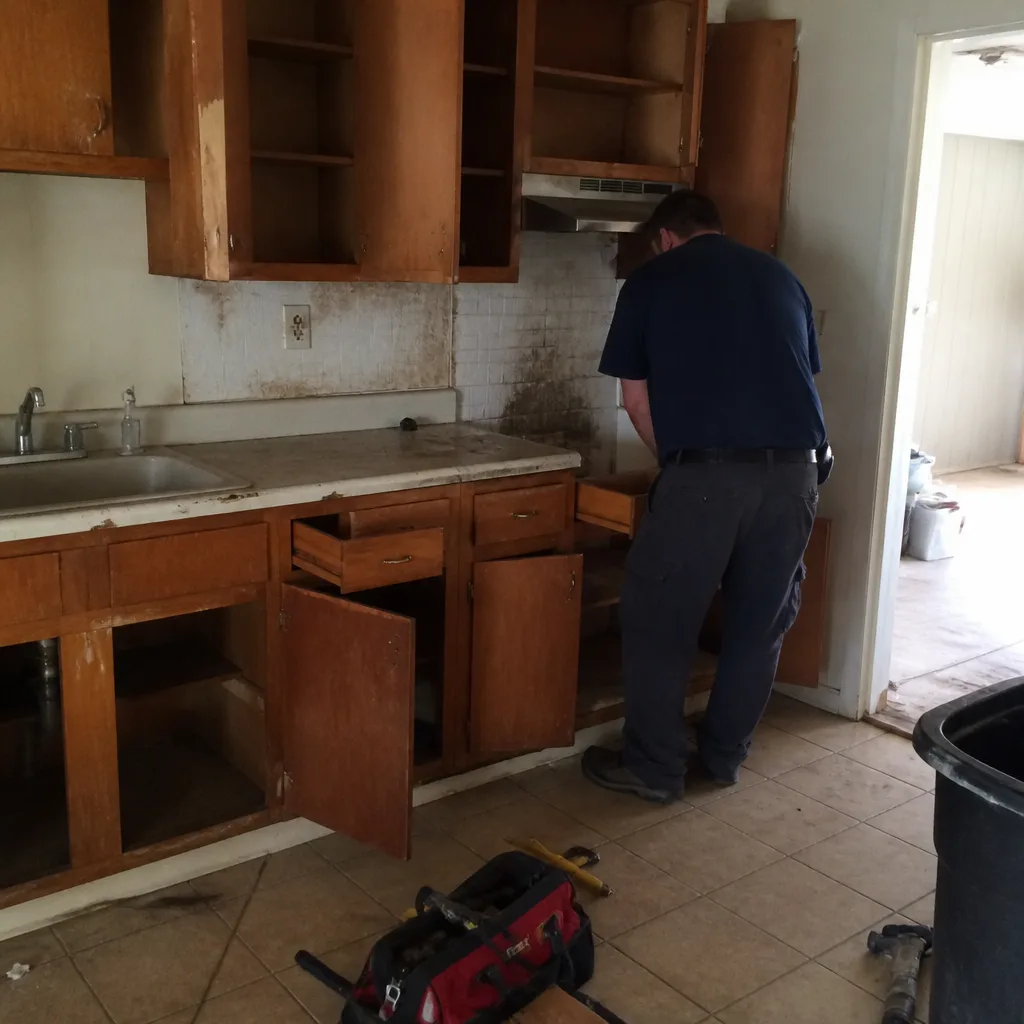 Before
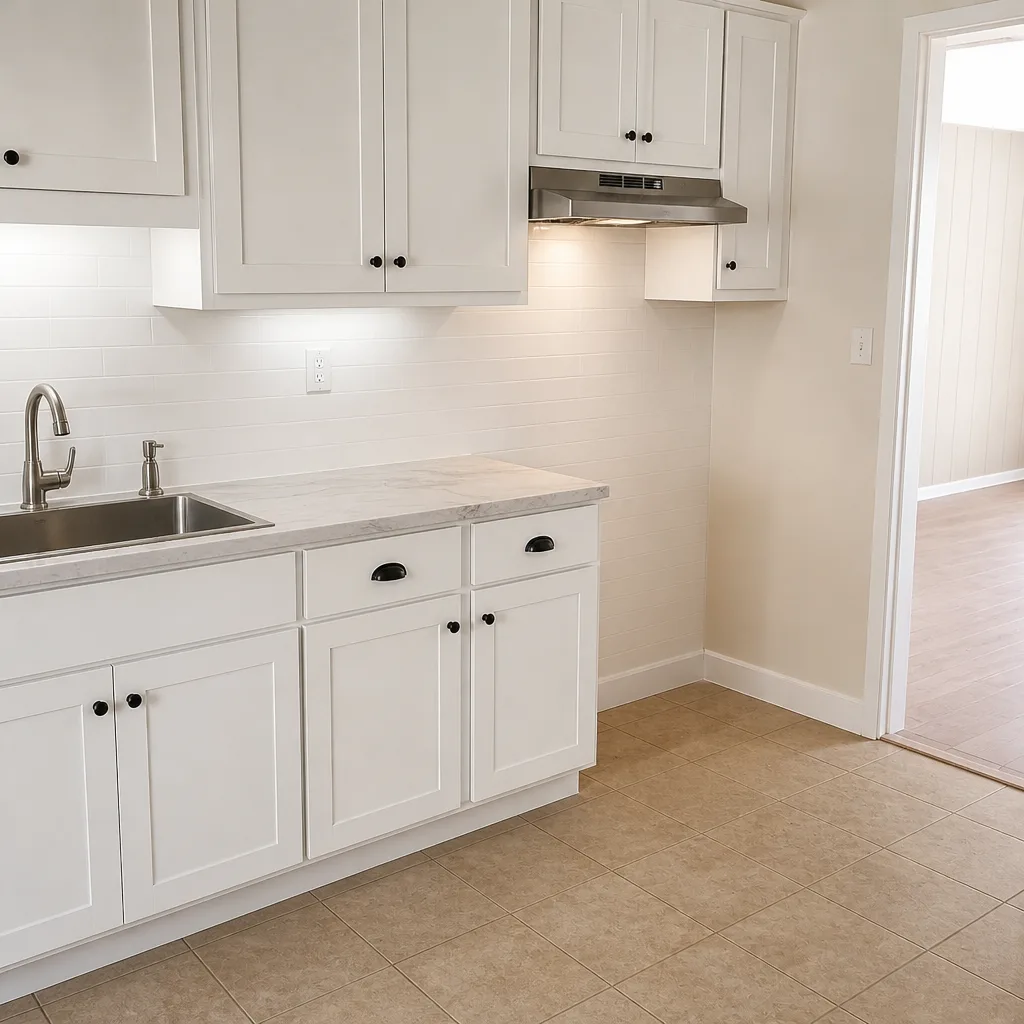 After
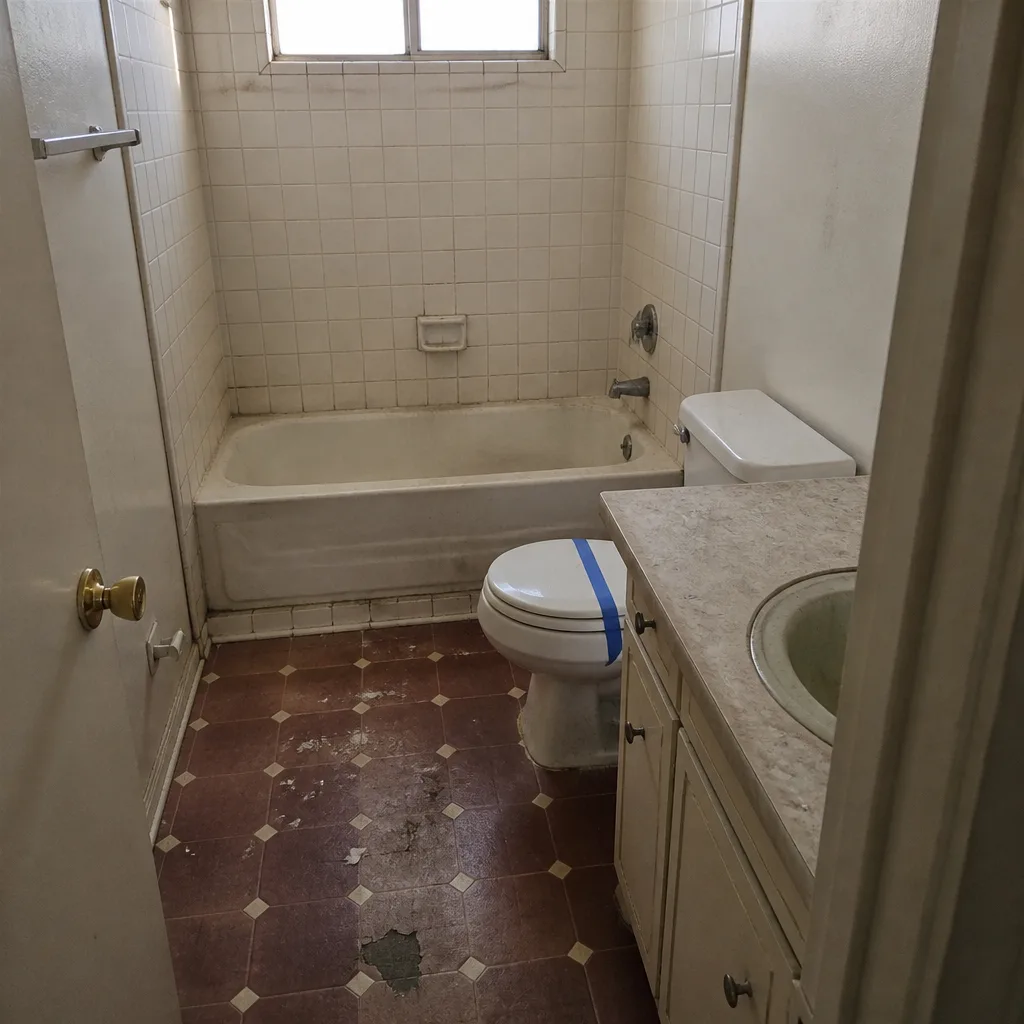 Before
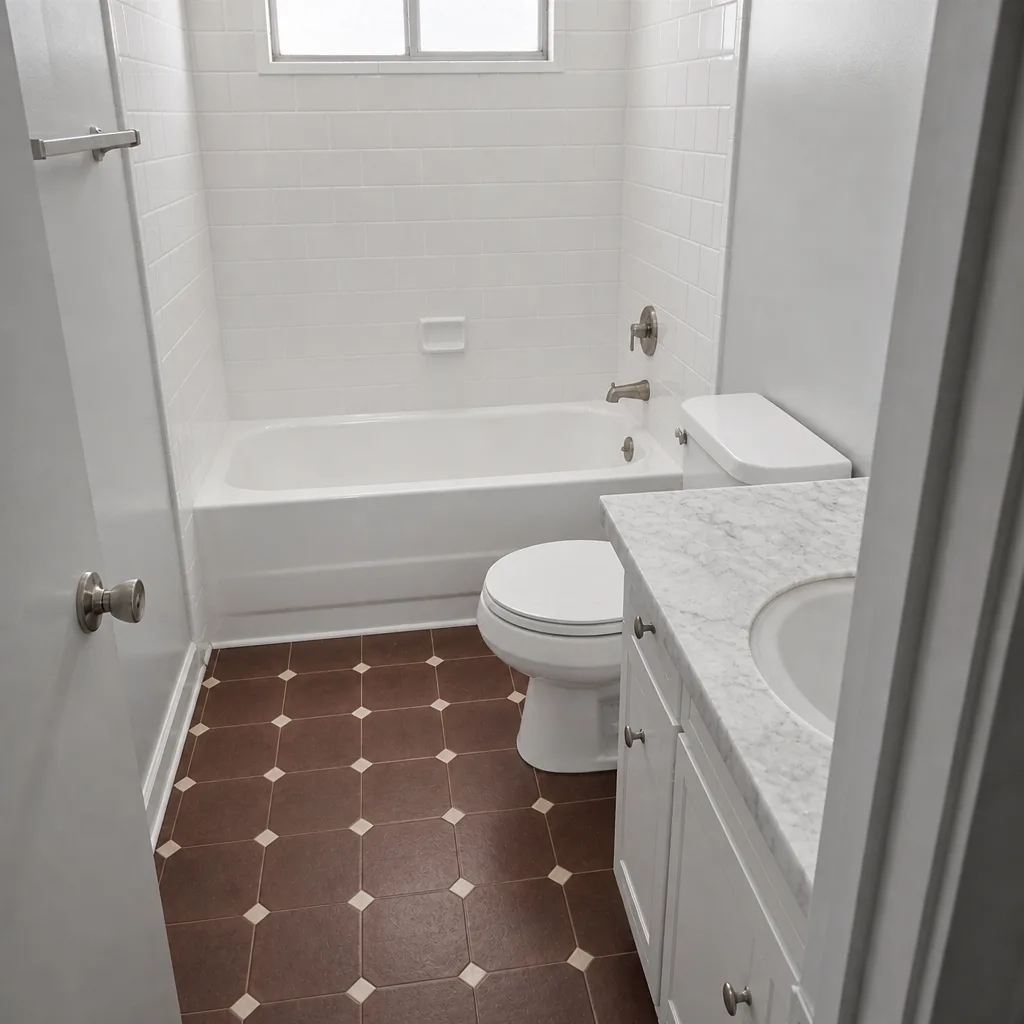 After
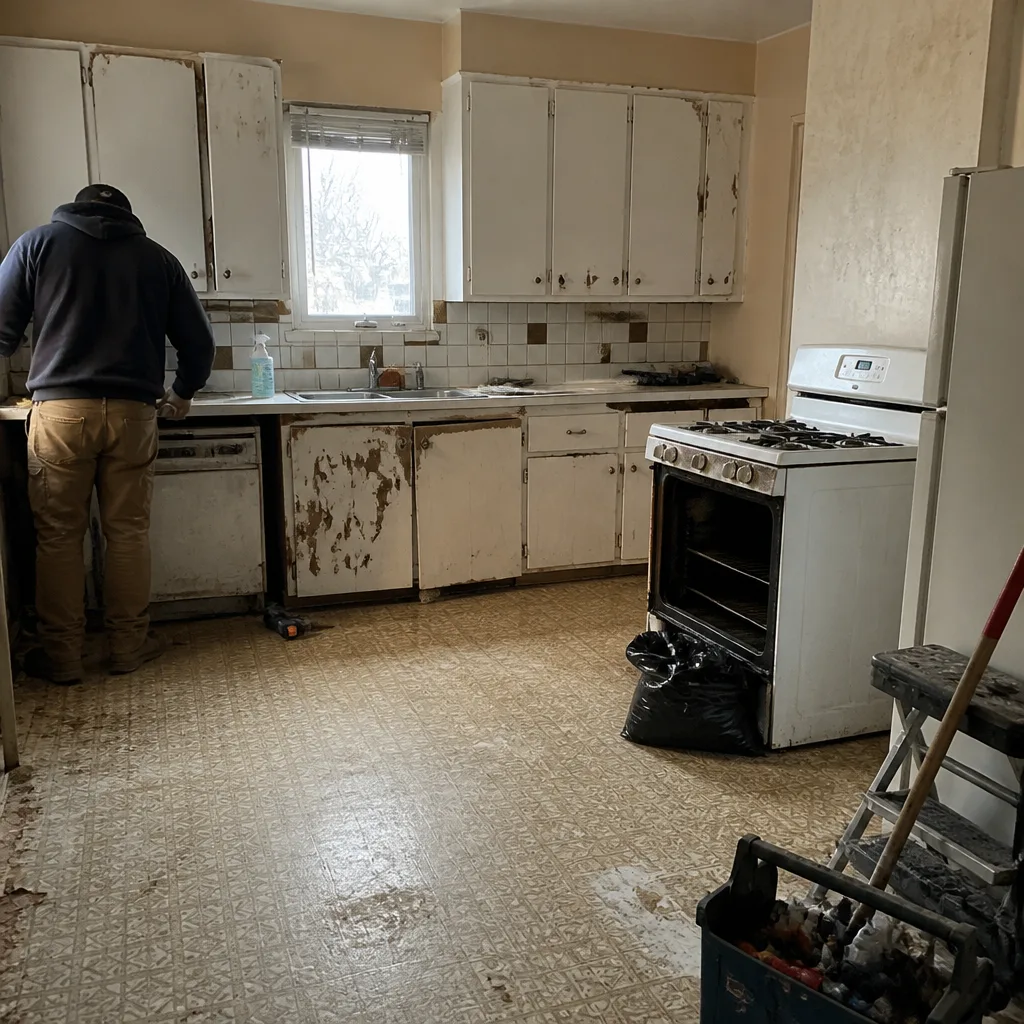 Before
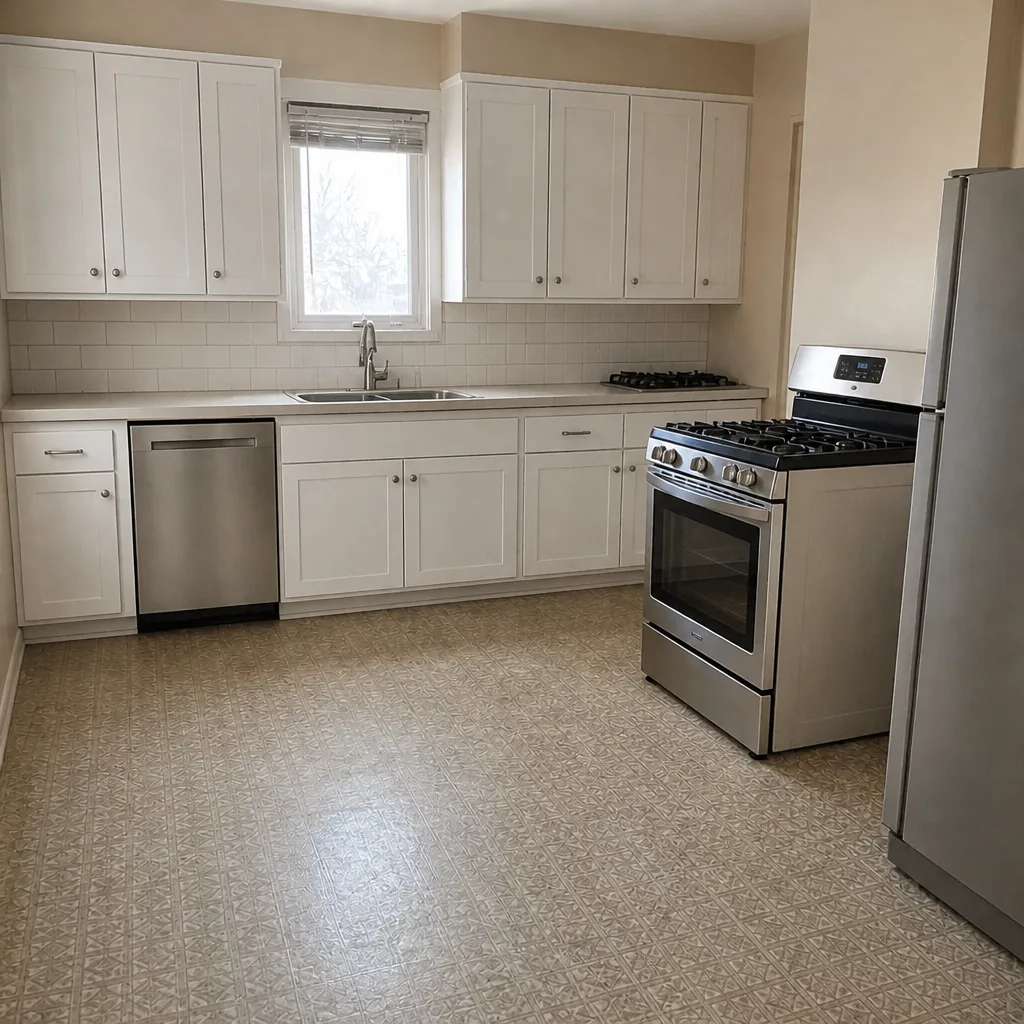 After
When to Call a Professional
Call in a professional when any of these are true: a diagonal crack from a door or window corner that has widened in the last year; any horizontal crack in a foundation wall; water staining on drywall or ceiling that reappears after rain; three or more roof wear signs visible from the ground; stucco staining or bubbling paint along the base of an exterior wall; a room that’s been off-temperature for more than one season; or any two warning signs clustered in the same area of the home. The safest call is the one made before the point of no return. Roof work, foundation work, and any moisture investigation behind a finished wall are scope decisions that belong to trained professionals. Sawyer Remodeling Winchester offers free estimates in Winchester. Call (888) 343-7097 to schedule one – you’ll get a written price before any work begins, a live arrival time, and photo updates from the walkthrough on.
Frequently Asked Questions

A crack is serious if it’s wider than about 1/16 inch, runs diagonally from a door or window corner, follows a stair-step pattern through block or brick, appears horizontally in a foundation wall, or has one side sitting noticeably proud of the other. Hairline vertical cracks in the middle of a wall are usually cosmetic. When in doubt, photograph it with a coin next to it for scale and get a walkthrough. Call (888) 343-7097 for a free estimate if you’re in Winchester.
The most common ones we see on Winchester properties are diagonal cracks at door and window corners, water staining at the base of stucco walls, bald patches and curled shingle edges visible from the ground, and condensation or musty smells in a single room that point to ductwork. All four are visible from standing distance and all four are worth tracking with dated photos.
Stucco damage can take one to two years to show up inside, and sometimes longer, because the assembly has to soak through before an interior clue appears. That delay is why an exterior check every spring matters more than waiting for an interior stain. If you can see bubbling paint or a stain at the base of a stucco wall from the outside, moisture is already in the wall.
Yes, roof repair and replacement can happen year-round in Winchester, though the schedule and materials handling change in the wetter months. What matters is that the roof is dry when work starts and that sealants are applied in the right temperature window for the product. A written price and a weather-aware schedule are what protect you, not waiting for the season to change.
Not if the scope and the price are in writing before work begins, which is how every Sawyer Remodeling Winchester project runs under The Relay Visibility Guarantee. A written price lands in your hands first, and the number on the invoice is the number you approved. If a walkthrough uncovers an actual unknown behind the wall, that gets a written change order you approve before we proceed. Call (888) 343-7097 for an exact quote – estimates are free.
No. Most warning signs are repairs – patching a crack, correcting flashing, replacing a shingle, or fixing the sealant around a window. A remodel becomes the right call when the warning signs are systemic (failing across an entire wall or system) or when the fix requires opening the assembly anyway. A free walkthrough is the fastest way to tell the difference in your specific Winchester home.
The Bottom Line
The warning signs that hurt Winchester homeowners most are the quiet ones: a widening diagonal crack, a fading exterior stain, shingles you stopped noticing two summers ago. They’re cheap to correct early and expensive to correct late. Start a folder, take dated photos once a season, and read the same three things a contractor reads on a first walkthrough: location, angle, width. When you’re ready for a second set of eyes on your own property, call Sawyer Remodeling Winchester at (888) 343-7097 for a free estimate. You’ll get a live arrival time, photo updates before and after, and a written price before any work starts.
Written by the team at Sawyer Remodeling Winchester.