Last updated November 18, 2026







Free written scope consultation - allowances, timeline, and change-order rules on paper before a single trade is scheduled
DIY vs Professional Bathroom Remodeling: What’s Safe to Do Yourself
Demo is the one phase almost every DIYer can handle. It’s also the phase most likely to uncover something that stops the job cold – a rotted joist, a shower pan that’s been leaking into the subfloor for years, or cloth-wrapped wiring that a previous owner buried behind the drywall. Before you swing a sledgehammer, understand that a bathroom remodel isn’t a skill contest. It’s a question of which mistakes you can recover from and which ones stay inside your walls for decades. This guide sorts every bathroom task into risk tiers, explains what Winchester permits require, and gives you a framework for a hybrid approach that actually saves money without gambling with your house.
Styles & brands we work with
- Kitchen remodeling
- Bathroom remodeling
- Home additions & ADU
- Roofing
- Windows & doors
- Driveway & pavers
- Fence
Quick Answer
Cosmetic work – paint, fixtures, mirrors, vanities, accessories – is genuinely safe to do yourself and rarely causes expensive damage. Mechanical work (plumbing, electrical) and structural or waterproofing work (shower pans, tile substrate, moving walls) should go to a licensed professional, because the failure mode is hidden water damage or a code violation that surfaces at resale. In Winchester, most permit-required bathroom work falls into that second and third category, which is where the real line gets drawn.
Table of Contents
- The Three Risk Tiers of Bathroom Work
- The Hidden Cost of DIY Mistakes: Tile Substrate and Shower Pan Failure
- What Winchester and Clark County Require Permits For
- The Realistic Time Cost of DIY
- The Hybrid Approach: Where DIY Prep Legitimately Saves Money
- Materials: Where Brand Choice Actually Matters
- Common Mistakes to Avoid
- When to Call a Professional
The Three Risk Tiers of Bathroom Work
Every task in a bathroom falls into one of three buckets. The trick is being honest about which bucket you’re standing in before you buy materials.
Tier 1: Cosmetic (Safe DIY)
These tasks can be undone with a repair or a repaint if you get it wrong. They don’t touch water lines, gas, or structure.
- Painting walls, ceilings, and trim
- Swapping a vanity top, faucet (with the water shut off at the valve), or shower head
- Replacing a toilet (assuming the flange is intact – more on that below)
- Hanging mirrors, shelving, and accessories
- Re-grouting tile joints (not replacing tile – just refreshing grout)
- Installing a new light fixture on an existing switched circuit (verify the box is rated and the breaker is off)
Tier 2: Mechanical (Requires Skill and Usually Permits)
Plumbing relocation, new electrical circuits, vent fan installs, and gas work live here. Mistakes here cause leaks behind walls, overloaded circuits, or code violations that appear on a home inspection.
- Moving or adding a drain line
- Adding a dedicated circuit for a heated floor or jetted tub
- Installing or relocating a vent fan (requires ducting to the exterior, which is easy to do wrong)
- Replacing a shower valve body (the part behind the wall, not just the trim)
Tier 3: Structural and Waterproofing (Almost Always Hire Out)
This is where the expensive failures live. Shower pans, tile substrate, and any wall movement fall into this tier. In our experience, this is where DIY remodels in Winchester most often go wrong – not because the homeowner lacks skill, but because the failure mode doesn’t show up for 18 months, by which time the subfloor is gone.
- Shower pan construction and waterproofing (a single missed seam in a Schluter system or a bad pre-slope is a slow-motion flood)
- Tile installation on floors and walls (bond failure and lippage are almost impossible to fix without tearing it out)
- Moving walls or modifying structural framing
- Subfloor repair or replacement
The Hidden Cost of DIY Mistakes: Tile Substrate and Shower Pan Failure
The reason waterproofing and substrate work belongs in a professional’s hands is that the cost of the mistake isn’t the cost of redoing the tile. It’s the cost of the water damage underneath.
Here’s the sequence that plays out more often than anyone wants to admit. A homeowner installs a shower pan over a pre-slope that isn’t quite right, or skips the membrane at the curb. Water passes through the tile and grout, hits the substrate, and stops there because there’s nowhere for it to go. Tile stays stuck for months. Then the grout starts to crack, the caulk at the curb peels away, and there’s a faint smell near the toilet. By the time anyone lifts a tile, the subfloor is soft, the curb has swelled, and the wall behind the shower has been wet long enough that the framing needs to come out.
Tile substrate failure runs the same way. A tile set over greenboard or over a substrate that flexes because the joists weren’t stiffened will start to crack along the grout lines within a year. Every cracked joint is a place water can enter. Once the substrate comes up, the repair involves demolition, new backer board, new waterproofing, and new tile – which is to say, roughly the same bill as having it done right the first time, plus the demolition and the water remediation on top.
That’s the honest comparison. A professionally installed shower in Winchester is priced once. A failed DIY shower is priced twice, with a contractor’s markup in the middle. We’ve seen homeowners spend more fixing a three-year-old DIY shower than they would have spent on a contractor-installed one from the start. If a shower is on your project list, our Bathroom Remodeling in Winchester team can quote the whole scope in writing before any demo starts.
What Winchester and Clark County Require Permits For
Permit rules vary by jurisdiction, so the specific list for any address should be confirmed with Clark County’s building department before work begins. The general categories that trigger a permit in most jurisdictions, including Winchester, are consistent:
- Any moving or adding of plumbing lines – relocating a drain, adding a sink, moving a toilet.
- Any new electrical circuits or panel work – heated floors, jetted tubs, new outlets.
- Any structural change – moving a wall, adding a beam, cutting into framing.
- New venting to the exterior – bathroom exhaust fans are one of the most commonly skipped permits.
- Window or door changes – even a same-size replacement can trigger a permit depending on the jurisdiction and product.
What happens if work gets done without a permit? Two things. First, if the work involves plumbing or electrical, an insurance adjuster can deny a claim if the damage traces to unpermitted work – the argument being that the work was never inspected. Second, at resale, an unpermitted remodel shows up in the disclosure and can either stall the sale or force a retroactive permit, which often means opening walls to inspect what’s hidden. In a Winchester market where buyers are already cautious about older housing stock, an unpermitted bathroom is a red flag that costs money at the negotiating table.
A licensed general contractor pulls the permit, schedules the inspection, and provides the documentation that lives with the house. That documentation is worth real money the day you list. If you’re weighing a larger renovation, our General Contractor in Winchester team handles permits and inspections on every project.
The Realistic Time Cost of DIY
The time math is where most DIY plans break down before the first fixture is installed. A professional crew can demo, prep, tile, and set fixtures in a typical Winchester bathroom in a matter of days. A weekend warrior with a full-time job does the same scope in six weekends – and those six weekends are spread across three months because life intervenes.
The bathroom is unusable the entire time. That matters more than people expect. If it’s the only full bathroom in the house, the household has to either shower at the gym, use the neighbor’s shower, or shower at a family member’s place. For a household with kids, that’s a real quality-of-life hit. Six weekends of living with a half-finished bathroom is also six weekends of tracking dust through the house and stepping around materials stacked in the hallway.
Pro crews work regular hours, keep a clean site, and finish. DIY schedules are always optimistic. The vanity setup that “should take an afternoon” takes two weekends because the shutoff valve is seized and needs replacing, and the drain line isn’t quite where it needs to be, and the wall needs to be opened to fix that. Each of those discoveries adds a week.
There’s also the hidden cost of a job that drags. Materials ordered early sit in the garage for weeks, sometimes getting damaged. Plans change mid-project, and materials already bought go back to the store. And a project stalled for months has a real risk of never finishing, which is why half-finished bathrooms are so common in homes sold as-is.
The Hybrid Approach: Where DIY Prep Legitimately Saves Money
There is a middle path, and it’s the one we recommend to homeowners who want to be involved but understand the stakes. The key is to separate the tasks that carry risk from the tasks that don’t.
Here’s a workable hybrid framework:
- Handle the demo yourself if you’re comfortable. Removing drywall, fixtures, tile, and old materials is labor-intensive but low-risk – with one caveat covered in the mistakes section below. It also reveals the conditions early so the contractor can price the actual scope, not a placeholder.
- Do the paint and finish work yourself. Paint, trim, caulk, and accessories are all recoverable. If a wall needs another coat, it costs $40 in paint and an afternoon.
- Source your own fixtures and materials. Choosing your own vanity, faucet, and tile lets you control the aesthetic and the budget. Bring a written spec to the contractor so the scope is clear.
- Leave the mechanical and waterproofing work to the licensed pro. Plumbing, electrical, venting, tile substrate, shower pans, and tile installation all go to the crew. This is the part of the job that carries permits, inspections, and long-term warranty implications.
- Coordinate the schedule in writing. The one thing that kills a hybrid project is an unclear handoff – the contractor waiting on your tile selection or your paint work holding up the fixture install. A written schedule with fixed dates makes the hybrid workable.
Done this way, the homeowner saves real money on labor without touching the work that carries the expensive failure modes. That’s the difference between a hybrid that saves 15 percent and a hybrid that ends up costing more than a straight professional job.
Materials: Where Brand Choice Actually Matters
The single most common DIY budget mistake is saving money on the wrong material. A cheaper vanity top is fine. A cheaper shower valve is not.
The materials that matter most in a bathroom, in order of how much they affect long-term failure risk:
- Shower valve and trim – a Kohler, Moen, or Grohe valve is serviceable, has parts availability a decade out, and is designed for decades of daily use. Off-brand valve cartridges often become unavailable within five years.
- Waterproofing membrane and sealant – the substrate and Schluter edge trim (the metal strip that waterproofs where your tile meets the floor) are the parts nobody sees. They’re the parts doing the actual work.
- Countertops – quartz surfaces from Cambria, Silestone, or Caesarstone hold up to a bathroom’s moisture and cosmetics exposure better than laminate and don’t stain the way natural stone can.
- Vanity cabinetry – KraftMaid and Wellborn offer real plywood boxes and drawer hardware that survives humidity. Particle-board boxes with stapled joints don’t.
- Windows – if a bathroom window is part of the project, brands like ES Windows and CWS make products that hold up in a high-humidity room. ECO Window Systems is another option when the scope includes a window replacement.
The pattern is simple: spend on what’s behind the tile and inside the wall. Save on what you’ll see.
Common Mistakes to Avoid
- Skipping the before-photo and shutoff test. Take photos of the plumbing and electrical before you close up walls, and test that the toilet shutoff actually turns off before you start demo. In our experience, seized shutoff valves are one of the most common causes of a mid-project flood in Winchester.
- Assuming the shower pan is fine because the tile looks fine. Tile can look perfect while the pan underneath is failing. Test for leaks before demo by plugging the drain and filling the pan for 24 hours.
- Using greenboard behind shower tile. It’s moisture-resistant drywall, not waterproof backer board. Tile set over greenboard will fail. Cement board with a liquid or sheet membrane, or a bonded waterproofing system, is the minimum in a wet area.
- Skipping the permit to save time. The permit is short money. The unpermitted remodel is a real problem at resale and a real problem if you ever file an insurance claim that traces to the work.
- Buying fixtures before the plan is set. A freestanding tub ordered before the drain location is confirmed is how a tub ends up as a landscaping ornament. Confirm the rough-in dimensions before ordering.
- Letting the vent fan vent into the attic. This is more common than you’d think in Winchester’s older housing stock. The moisture condenses in the attic and creates a mold problem you won’t find until it’s a serious issue. The fan duct has to terminate to the exterior.
- Believing the six-weekend estimate. It’s realistic to plan for at least double the time you’re assuming, and to have a working backup shower during the job.
When to Call a Professional
Call a professional the moment the scope crosses from cosmetic into any of the following:
- You’re moving a drain, valve, or supply line
- You’re installing a shower pan or waterproofing system
- You’re tiling a floor or shower wall
- You’re running new electrical or installing a vent fan
- You’re moving any wall
- You’re finding water damage or soft subfloor during demo
- The permit question is unclear for your address
Any one of those calls for a licensed professional on the job. Two or more of them together means it’s time to quote the whole scope, not piece it out. Sawyer Remodeling Winchester offers free estimates in Winchester – call (888) 343-7097 to schedule yours. We’ll come out, walk the bathroom, and give you a written price before any work starts.
If you’re planning a broader renovation, the Kitchen Remodeling in Winchester team handles adjacent scope so the whole house stays on one schedule.
Frequently Asked Questions
Not if the work involves plumbing, electrical, structural changes, or a new vent to the exterior. Cosmetic-only work like paint, faucet swaps, and accessory installs generally doesn’t require a permit, but the exact list depends on the jurisdiction and should be confirmed with Clark County’s building department for your address. Unpermitted work can complicate insurance claims and stall a resale.
Shower pan and tile substrate failure. A shower that looks fine on the surface can be leaking into the subfloor for 18 months before the damage reveals itself, and the repair bill involves demolition, new waterproofing, new tile, and water remediation – typically more than doing it right once. The second-most-expensive is unpermitted plumbing that fails an inspection at resale.
A typical bathroom – full tear-out, new tile, new fixtures, same footprint – runs in the range of a few days to a couple of weeks of active work depending on scope and material lead times. A homeowner doing the same scope on evenings and weekends should plan on at least two to three months, with the bathroom unusable for most of that span. Call (888) 343-7097 for a scope-specific timeline on your bathroom.
Only when the scope stays in the cosmetic tier. As soon as you touch plumbing, electrical, or waterproofing, the DIY savings shrink fast and can flip negative if a hidden failure occurs. The hybrid approach – demo your own tile and drywall, do your own paint and finish work, leave mechanical and waterproofing to the licensed pro – is where real savings live without real risk.
For any work that requires a permit – plumbing, electrical, structural, or new venting – yes, a licensed contractor should pull the permit and do the work. Cosmetic-only work doesn’t require a licensed contractor, though it’s a good idea to confirm insurance coverage for anyone working on your home. The written contract should spell out the scope, the permit responsibility, and the payment schedule.
Pricing depends on scope, material choices, and whether the layout is changing. A cosmetic refresh (paint, fixtures, vanity top) is the low end; a full tear-out with tile, new shower, new plumbing, and new cabinets is the high end. The best way to know is to get a written, line-item estimate that covers permits, labor, and materials separately so you can see where the money goes. Call (888) 343-7097 for a free estimate in Winchester.
The Bottom Line
Splitting a bathroom remodel by risk tier, not by skill, is the honest way to plan a DIY project. Cosmetic work is genuinely safe and worth doing yourself. Mechanical and waterproofing work is where the expensive, hidden failures live, and it’s where a licensed professional earns their fee many times over. Hybrid projects – where the homeowner handles demo and finish work but the pro handles plumbing, electrical, and tile – are the sweet spot for most Winchester households. The bathroom will be done on a schedule, the price will be in writing before the first tool comes out, and the work will hold up when the house is sold. That’s a better outcome than a six-weekend project that turns into six months. Call (888) 343-7097 to schedule your free estimate and see the whole scope on paper before you decide how much you want to take on. Learn more about Sawyer Remodeling Winchester home and what we cover on every project.
Written by the team at Sawyer Remodeling Winchester.
See the difference
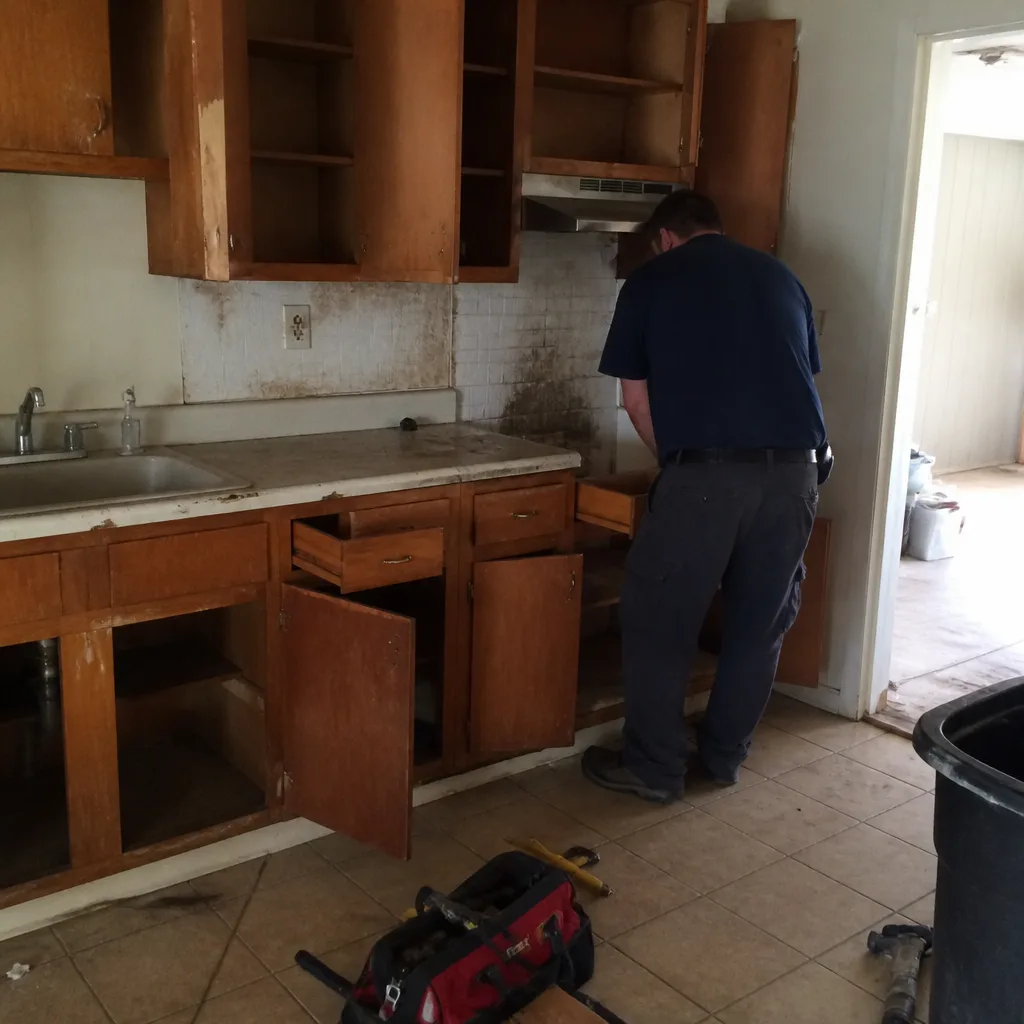 Before
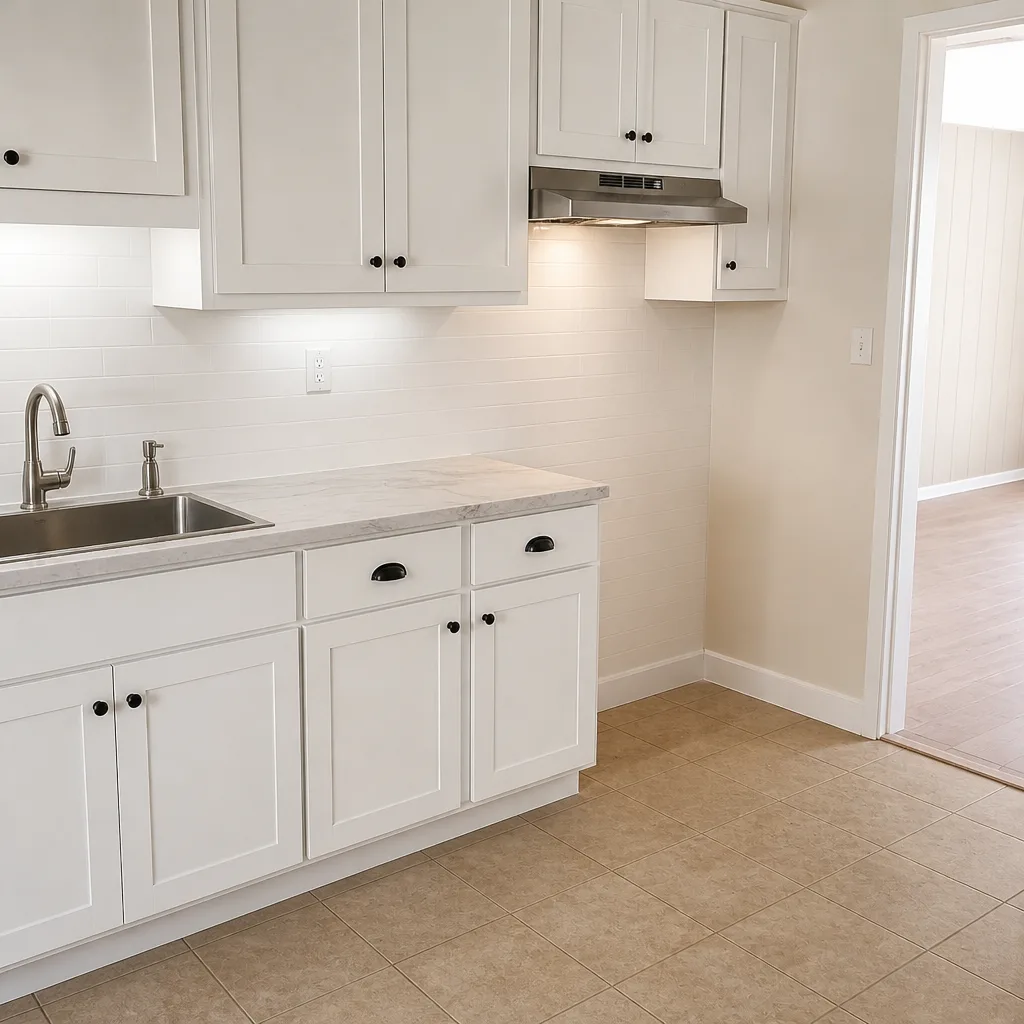 After
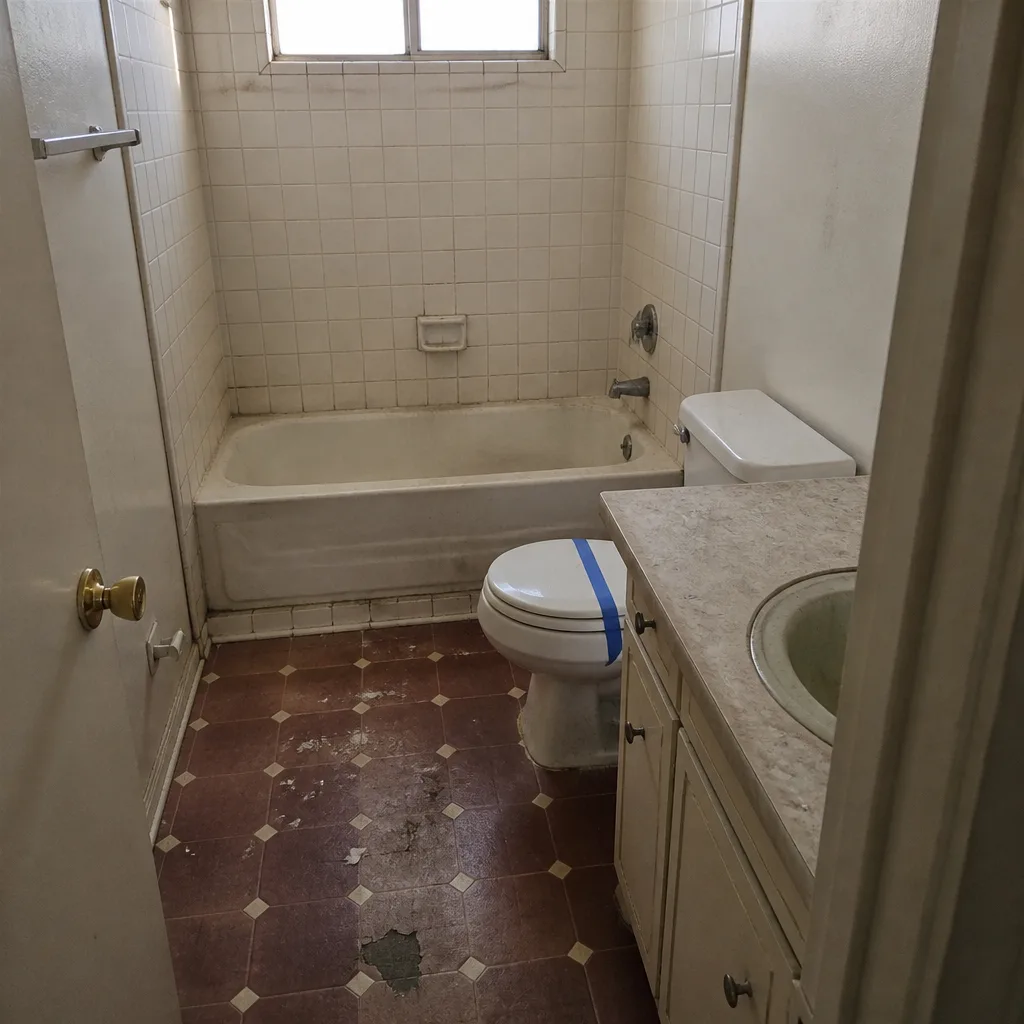 Before
 After
 Before
 After